
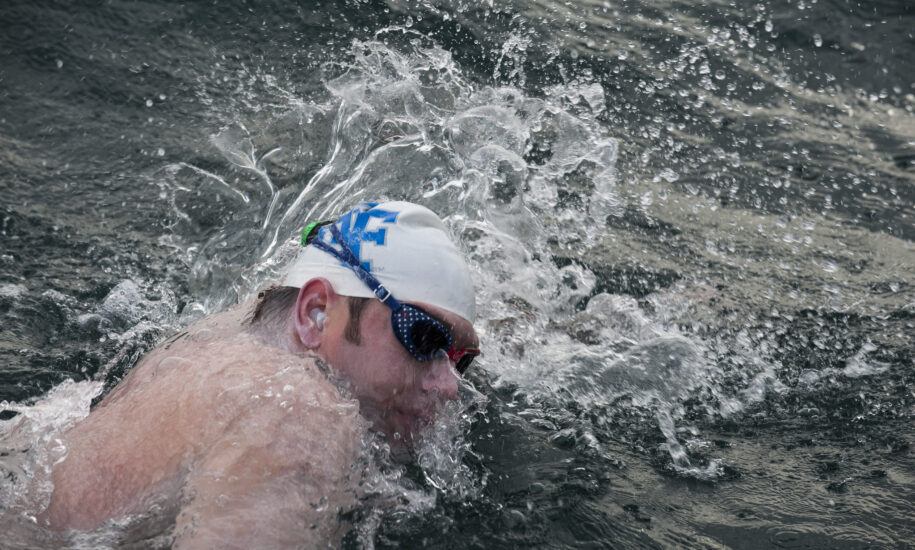
The stretch of water between England and France has long captured the imagination of adventurers and athletes. Known as the English Channel — or La Manche to the French — this narrow but ferocious body of water has become one of the most celebrated open-water swimming routes in the world. The nearby town of Dover is considered the global centre of channel swimming, and for visitors staying at Kingsdown Holiday Park, it is only a short drive away. Kingsdown itself has a proud connection to channel swimmers, with the park regularly hosting athletes who use it as a base during their crossing preparations.
Why Dover Became the Home of Channel Swimming
Dover sits at the narrowest point of the English Channel between England and France. At its closest, the distance between Shakespeare Beach in Dover and Cap Gris-Nez in France is approximately 21 miles (34 kilometres) — though thanks to the powerful tidal currents of the Strait of Dover, most swimmers cover considerably more distance than that. The route typically follows an S-shaped path, and the total distance swum can reach 30 to 40 miles depending on the tidal conditions on the day of the crossing.
Strong currents, water temperatures that rarely exceed 17°C even in summer, jellyfish, shipping traffic, and unpredictable English weather make the Channel crossing far more demanding than the mileage alone suggests. Dover’s natural geography — its sheltered harbour, proximity to the narrowest crossing point, and its deep maritime heritage — made it the natural starting point for Channel swimming attempts from the very beginning.
Captain Matthew Webb: The First Successful Crossing
The story of channel swimming begins in earnest on 24–25 August 1875, when Captain Matthew Webb became the first person to successfully swim across the English Channel without assistance. Webb entered the water at Admiralty Pier in Dover at 12:56pm and arrived at Calais Sands 21 hours and 45 minutes later, having swum an estimated 38 miles due to the tidal drift. He completed the crossing using the breaststroke, without a wetsuit, sustained by beef tea, cod liver oil, and ale passed from his escort boat.
His achievement was extraordinary. Several others had attempted the crossing and failed before Webb succeeded. A blue plaque at Admiralty Pier in Dover marks the starting point of his historic swim, and his story continues to inspire channel swimmers from around the world today.
The Channel Swimming & Piloting Federation
All official English Channel crossing attempts are governed by the Channel Swimming & Piloting Federation (CS&PF), based in Dover. Founded in 1999, the CS&PF is the internationally recognised body responsible for ratifying solo and relay crossings of the English Channel. To count as an official crossing, swimmers must follow strict rules: no wetsuits, no fins, and no physical assistance. Swimmers must be accompanied by an approved pilot boat throughout.
As of recent records, over 2,500 solo crossings of the English Channel have been completed. For every successful crossing, many more attempts are abandoned due to conditions, exhaustion, or illness — which is precisely why completing a solo channel swim remains one of the most respected endurance achievements in sport.
Notable Channel Swimming Records
Since Captain Webb’s first crossing, the records have been pushed ever further. The fastest solo crossing of the English Channel stands at 6 hours 55 minutes, set by Trent Grimsey of Australia in 2012. Two-way crossings — swimming from England to France and back again without stopping — have been completed in under 24 hours by elite swimmers. Relay teams of up to six swimmers can also make official crossings, with each swimmer rotating through the water in turns.
Shakespeare Beach: The Starting Point
Most channel swimming attempts begin from Shakespeare Beach, a shingle beach located to the west of Dover Harbour, beneath the famous White Cliffs of Dover. For channel swimmers and their support crews, this beach is a place of intense anticipation — the point where months or years of preparation finally meet the water. Visitors to the area can walk to Shakespeare Beach from Dover town centre, and watching a swimmer enter the water before a crossing attempt is one of those genuinely moving sporting spectacles.
Modern Channel Swimming
Channel swimming today attracts participants from around the world — from professional open-water athletes to determined fundraisers and adventure-seekers. Most aspirants spend one to three years preparing, building cold-water tolerance and long-distance capacity. Training swims of six, eight, and ten hours in open water are common in the months before a crossing attempt.
The swimming season typically runs from June to September, when the water temperature is at its highest — though even in peak summer, the English Channel rarely exceeds 17–18°C. Swimmers are assigned a tide slot by their approved CS&PF pilot, and the actual crossing date depends on weather windows that can shift at short notice. It is not unusual for swimmers to be on standby in Dover for several days before conditions become favourable.
Watching Channel Swimmers in Dover
Training swims often take place along the Dover seafront and at Samphire Hoe — the remarkable nature reserve created from chalk spoil excavated during the construction of the Channel Tunnel, located between Dover and Folkestone. Samphire Hoe sits directly beneath the White Cliffs and offers a spectacular vantage point over the Strait of Dover. During peak season (July and August), it is not uncommon to see pilot boats escorting swimmers heading toward France.
The Dover Harbour Board and local clubs also organise open-water swimming events throughout the summer. The annual Dover Harbour Swim attracts swimmers of all abilities and is a great occasion to witness the channel swimming community in action.
Kingsdown Holiday Park: A Base for Channel Swimmers
Kingsdown Holiday Park has a direct and well-established connection to the channel swimming community. The park’s location — just minutes from Dover, with immediate access to the coastal path and the beach at Kingsdown — makes it a practical and peaceful base for swimmers and their support teams ahead of a crossing attempt. Several channel swimmers use the park’s self-catering accommodation in the days before their tide slot, valuing the proximity to Dover, the quiet setting, and the ability to prepare and rest properly.
Whether you are preparing for a crossing, supporting someone on their channel swimming journey, or simply a visitor with an interest in this stretch of water and its history, Kingsdown’s holiday chalets and cottages offer an ideal location from which to explore the area.
Explore Dover’s Coastal Heritage
While in the area, there is much else to explore. Dover Castle is one of the finest medieval fortresses in England. The White Cliffs of Dover offer breathtaking walking paths with views across the Strait of Dover to France on a clear day. The South Foreland Lighthouse, a National Trust property near Kingsdown, was the site of the first international wireless telegraph transmission by Marconi in 1898. Deal, just a short distance from Kingsdown, has a beautifully preserved seafront and a rich maritime history of its own.
Discover Dover During Your Stay
Dover’s connection to channel swimming, combined with its remarkable coastal scenery and deep maritime history, makes it one of the most fascinating destinations on the Kent coast. From Kingsdown Holiday Park, Dover is only a ten-minute drive, making it simple to combine a visit to Shakespeare Beach and the White Cliffs with broader exploration of the area during your stay.
You can explore our full range of holiday chalets and cottages in Kingsdown — all just minutes from the beach and the short drive to Dover. Looking for more local inspiration? Explore our full blog for guides to coastal walks, historic places to visit, golf, and the best of the Kent coast.